What you think 3D printing is — and what it actually became.
In the last few years, 3D printing crossed a threshold that changed what a small company can build — and that shift is the reason Synnovation exists.
While many people are now familiar with affordable home-based 3D printing, in reality this type is only one of several completely different types of 3D printing. It’s called FDM (Fused Deposition Modeling), and it can be used to create many innovative and fun items. But when you are trying to solve real-world problems, you often need more powerful types of 3D-printing technology that let you work with a wide variety of materials, ranging from soft or flexible plastics to metals including aluminum and stainless steel. For example, our BassoonPerch ™ product alone uses three different 3D-printing technologies in a single product. Here is what each one actually does.
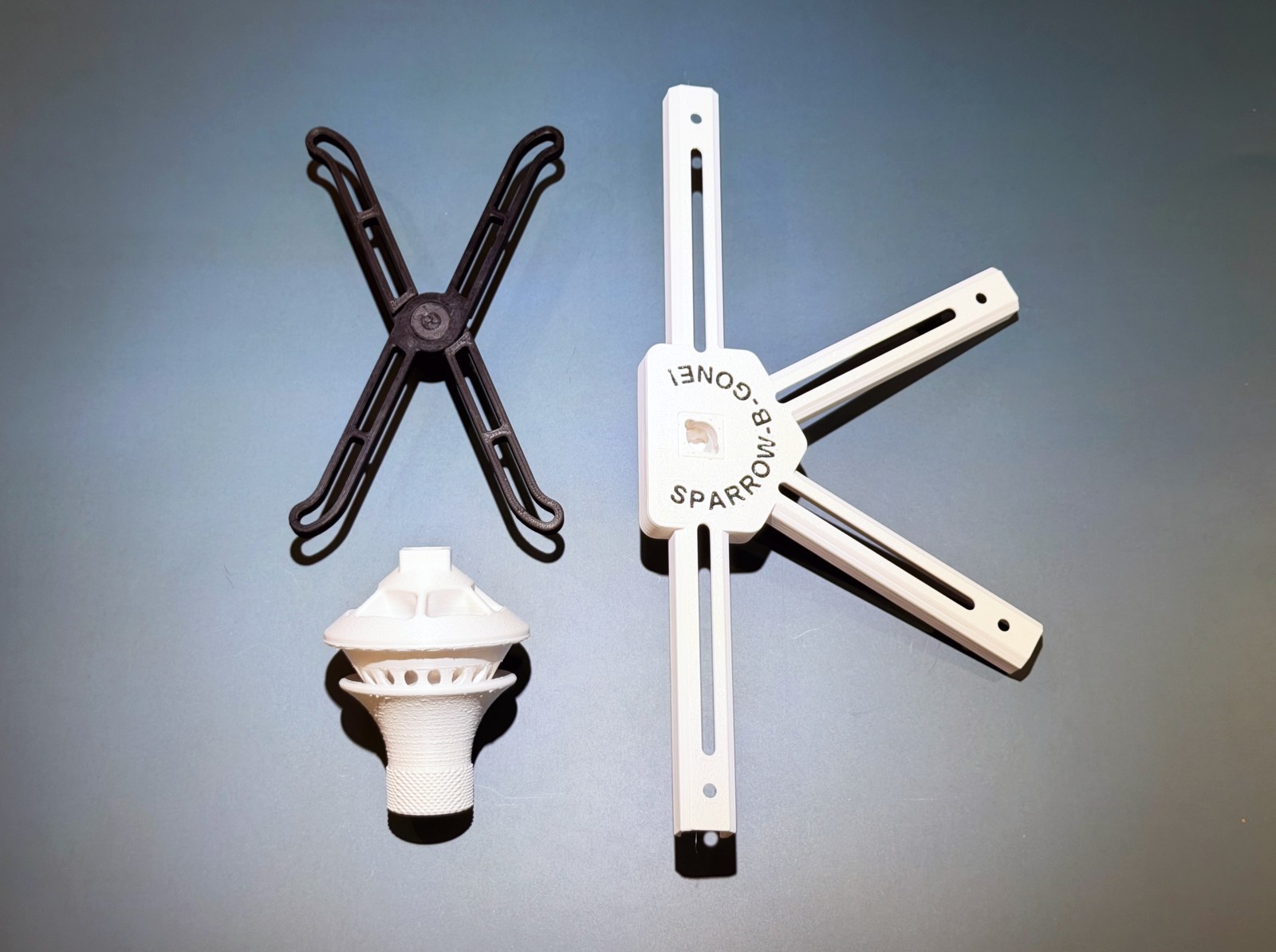
The workhorse, and the one most people already know. A heated nozzle lays down melted engineering thermoplastic — PLA, PETG, ASA, and tougher carbon-fiber-reinforced blends — layer by layer. Affordable, fast to iterate, and capable of durable functional parts. It is where most of our consumer products begin.
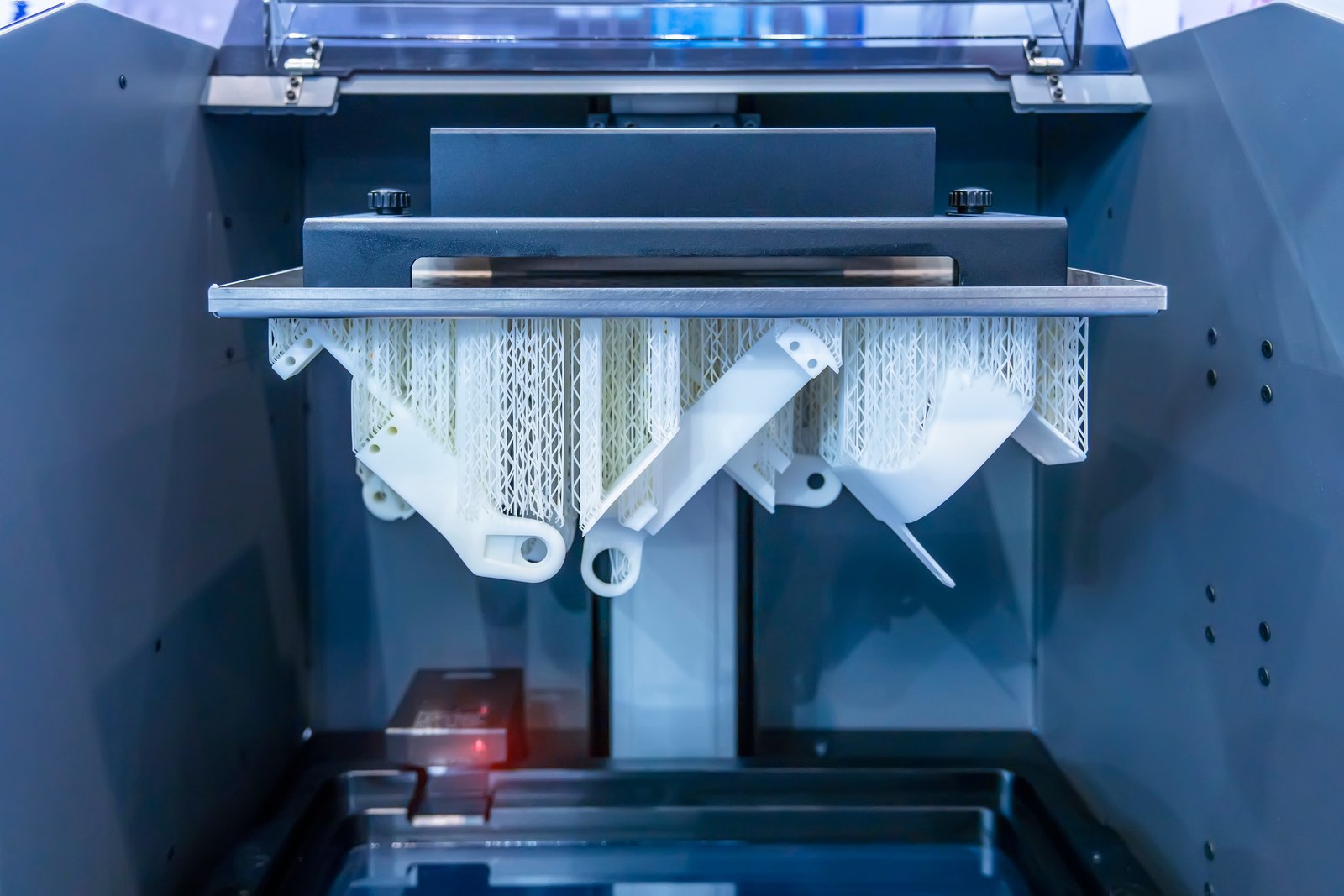
The original 3D printing technology, and still the most visually striking. A UV light source cures liquid resin into solid parts with extraordinary fine detail and glass-smooth surfaces. Watching a finished object rise slowly out of the resin tank is the moment most people realize industrial 3D printing is another world entirely — ideal for intricate geometry and fine features FDM can’t achieve.
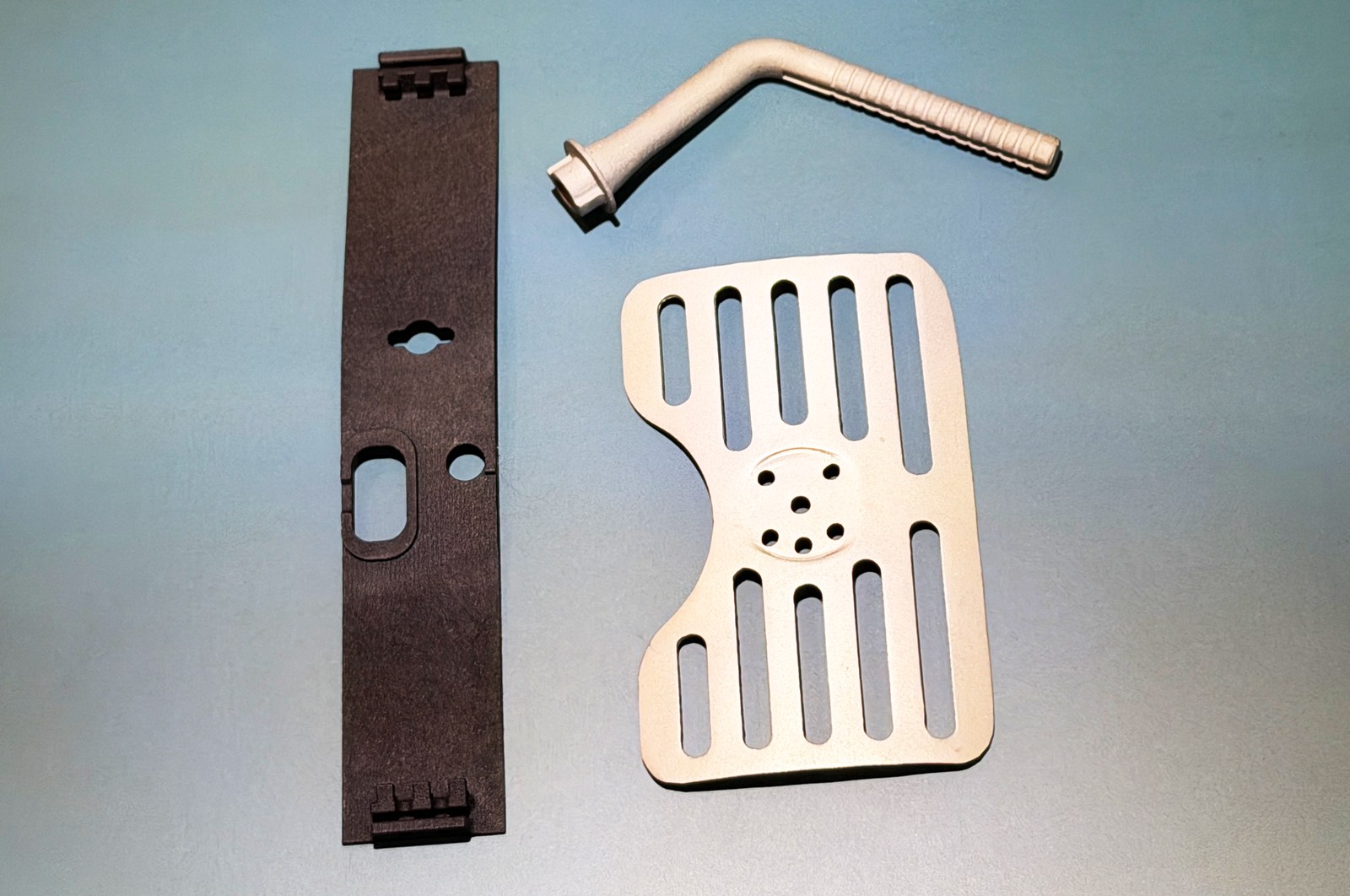
Two closely related processes that fuse fine powder with a laser, one layer at a time. With plastics (SLS), it produces tough nylon parts in complex shapes impossible to mold — no support structures required. With metals (SLM), it melts titanium, aluminum, or stainless steel powder into fully dense parts with the strength of machined stock. This is how one small company can produce metal components that used to require a machine shop.
3D printing changes the economics of making things. The trade-offs below are what let a small, disciplined company compete — and sometimes do what conventional methods simply can’t.
| Category | 3D Printing | Traditional Methods |
|---|---|---|
| Startup Cost | Very low — no molds or tooling. The same cost whether you make 1 part or 100. | High upfront. Injection molds run $5,000–$100,000+, spread across large runs. |
| Cost Per Part | Higher per unit, and flat — it doesn’t drop with volume. Best for runs of 1–1,000. | Very low per unit at high volume — pennies a part in mass production. |
| Speed | First part in hours. Design changes take minutes — update the file and reprint. | Tooling takes weeks to months. Changes after tooling are slow and expensive. |
| Design Freedom | Very high. Hollow interiors, undercuts, and complex shapes add no cost. | Limited by the mold. Complex features need costly workarounds or are impossible. |
| Materials & Strength | A broad range of plastics, resins, and metals; parts can have some directional grain. | Broadest material range; molded and machined parts are uniformly strong. |
| Surface Finish | Layer lines are visible in most processes; some finishing for a polished look. | Smooth, consistent surfaces straight out of the mold. |
| Best Use Case | Prototypes, custom and low-volume products, and designs that change often. | Stable, high-volume products where tooling cost is justified by quantity. |
| Path to Scale | Start at low volume with no tooling risk, then move to injection molding once demand is proven. | Commit to high-volume tooling and cost before demand is proven. |
This is why a small company can solve big problems.
Collapse the cost of tooling and the time to a first part, and the whole equation changes. A small team can take an idea to a finished, shipping product in months instead of years, using 3D printing to design and validate a product and then scaling to whatever process is most economical at volume, injection molding included. That’s the reason Synnovation can pursue a portfolio of unrelated problems at once, each one its own business.